

ENGINEERING / PRACTICAL LEARNING
Knowing the syntax is a start. Understanding the work takes practice
At Ncode, we help people learn by building real projects. The goal is to understand how things work, not just memorise code.
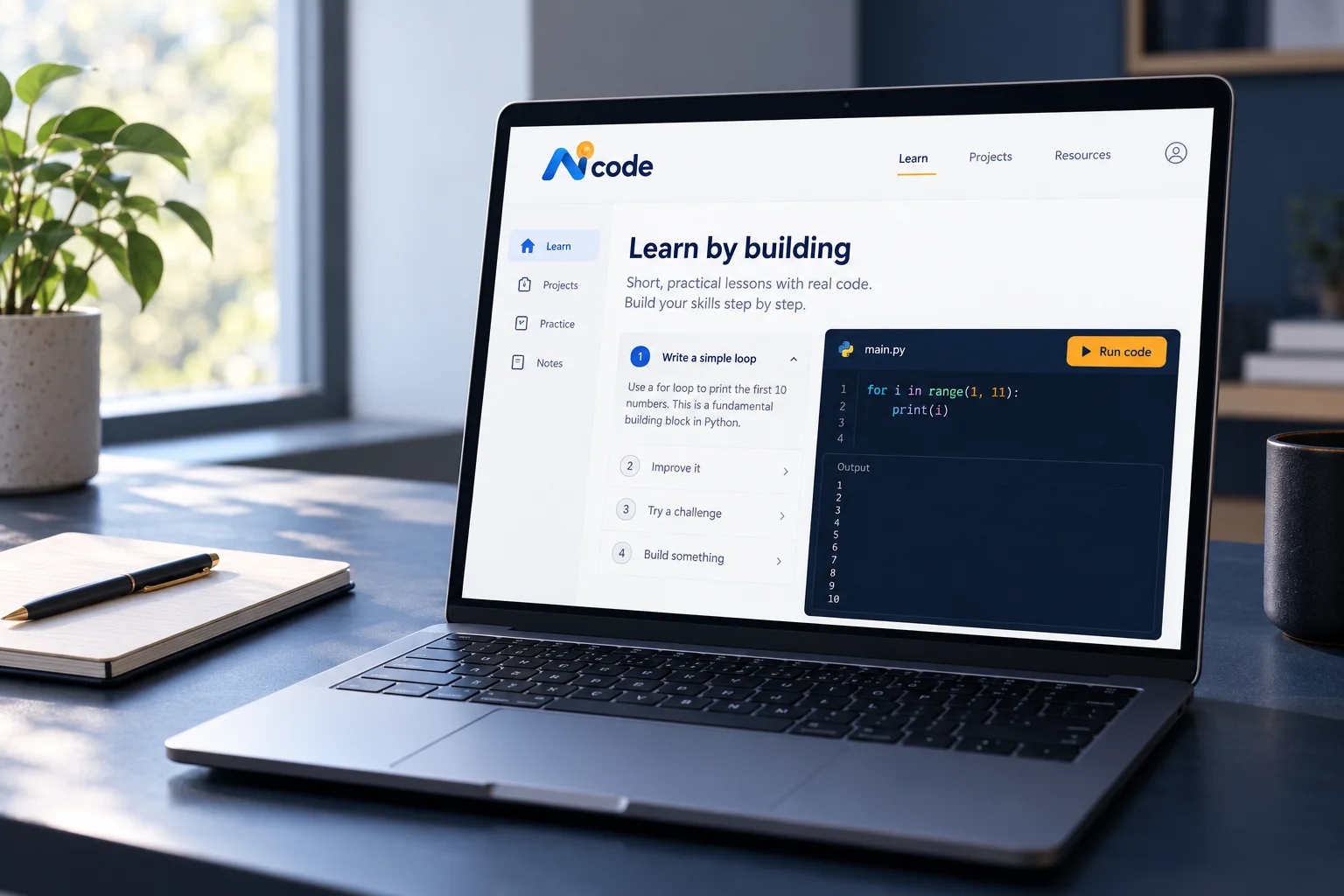
Why we built Ncode
Real development includes reading unfamiliar code, breaking down requirements, debugging, and evaluating a solution. Isolated exercises do not cover all of that work.
Ncode combines software development, project guidance, and personalised learning. My contribution includes backend engineering, product strategy, and translating client needs into practical software.
HOW THE WORK DEVELOPED
The project, step by step
Stages describe the work, rather than promising a fixed release timetable.
- 01
Recognising the gap
Learning the syntax and feeling able to handle a real project are different things.
- 02
Defining the mentorship model
Explore guidance based on a learner’s goals, current abilities, and practical projects.
- 03
Designing the services
Develop concepts for Python mentorship, backend engineering, project guidance, technical problem-solving, and software delivery.
- 04
Building the platform
Work on the website and technical infrastructure, backend implementation, product strategy, and service planning.
- 05
Working through a real learning need
A learner wanted AI tools to help write code while still understanding and reviewing the result. The guidance focused on logic, code reading, error recognition, and evaluating generated implementations.
MY CONTRIBUTION
Where I work on the details
- Backend development with Python, Django, APIs, and relational databases
- Python exercises, code review, and practical guidance
- Service planning and client communication
- Product strategy and technical implementation